

Introduction
Finally, nine years since their last album, with nearly a decade spent chasing sobriety and paying the price of being one of Britain’s most influential indie rock bands, The Libertines have released their fourth studio album; ‘All Quiet On The Eastern Esplanade’. Released April 5 2024, the album has been widely anticipated, not least because it embodies the reunion of Libertines’ front-men Pete Doherty and Carl Barât, whose infamously tumultuous and ambivalent relationship has exacerbated intrigue surrounding the band since the two met in 1997. A true Libertines revival, Doherty and Barât are joined by bassist John Hassall and drummer Gary Powell to record an eleven-track album that (hopefully) wont end in anyone getting kicked out of the band.
Interestingly, on ‘All Quiet On The Eastern Esplanade’ all four band members have been given equal song-writing credits on every track of the album. This seems to be some semblance of the bands’ new-found commitment to solidarity and unity, feelings that have been painfully absent in The Libertines’ past. Indeed, despite The Libertines’ undeniable talent and legacy, particularly within British guitar music, it is arguably their chaotic, violent and heartbreaking history that lends the band so much of its notoriety. It would be impossible to provide a comprehensive commentary on The Libertines’ new album without discussing its place within the band’s timeline. Therefore, this article aims to understand why ‘All Quiet On The Eastern Esplanade’ isn’t just another album for The Libertines, but an incorporeal atelier used to try and address – or bury – an indelible past.
The Libertines’ early history
When one thinks of the indie garage/post-punk revival in Britain’s early 2000s, The Libertines are one of the first names to come to mind. Taking influence from bands such as The Clash, The Kinks and The Jam, The Libertines enlivened the British indie scene through their dynamic, refreshing sound and through the chaotic reputation that their live shows began to garner. Doherty and Barât met through Doherty’s older sister in 1997, a creative relationship nurtured through mutual admiration – Barât taught Doherty guitar whilst absorbing and facilitating Doherty’s poetry and eccentric ideologies. The Libertines were quickly established and soon received their first record deal from Rough Trade, subsequently releasing their first album ‘Up The Bracket’ in 2002. Frenetic live performances combined with confronting lyrics exposing a minacious, filthy London nightlife and a venerated Arcadia became The Libertines’ trademark sound. Young, handsome and reckless, the two front-men captured the media’s interest, which intensified during Doherty’s infamously high-profile relationship with Kate Moss and his increasing submergence into a world of drugs, violence and criminality.

The beginning of the end
The path of self-destruction Doherty was venturing down only increased media intrigue and obsession with the band, and the press’ sick conviction that Doherty would join the ‘27 Club’ led to The Libertines becoming one of most notorious groups in the British rock scene of the early noughties. Despite the success of ‘Up The Bracket’, irreparable fractures were already becoming evident within the band. Doherty’s addiction to crack and heroin worsened the implicit competitiveness and jealously between the two front-men, which resulted in a growing bitterness and dislike between Doherty and Barât. Doherty was briefly kicked out of the band in 2003 due to his unbridled drug use, leading The Libertines to perform at Reading Festival without him. Watching interviews of Doherty and Barât at award shows and live performances, it seems obvious that the instinctive charisma and insatiable narcissism of these two young men would be the catalyst to both their rise and downfall.
Despite Doherty serving time for breaking into Barât’s apartment, the band reunited for a self-titled second album ‘The Libertines’ in 2004. The Libertines’ second album was another huge success, but this was again plagued by Doherty’s ongoing addictions, with him becoming increasingly unreliable, incoherent and unmanageable. The fractured and fragile state of Doherty and Barât’s relationship was encapsulated by the heartbreakingly poignant first track of the second album; ‘Cant Stand Me Now’. It’s almost painful to listen to the three and a half minutes of accusations and disappointment – the song is perhaps a glimpse into the most vulnerable dialogue these two men could bear to have. The Libertines eventually kicked Doherty out of the band again in 2004 and toured without him, an insult which may have been the final strain on Doherty and Barât’s dysfunctional relationship. Although Hassall and Powell are incredibly talented musicians, it was ultimately Doherty and Barât’s dynamism that conceived The Libertines’ following and Doherty’s addiction and collapse that gave them their legacy. The Libertines then informally disbanded in 2004 and the co-frontmen pursued successful independent projects; Doherty forming Babyshambles then The Putas Madres and Barât forming Dirty Pretty Things, with Powell following him as the band’s drummer.
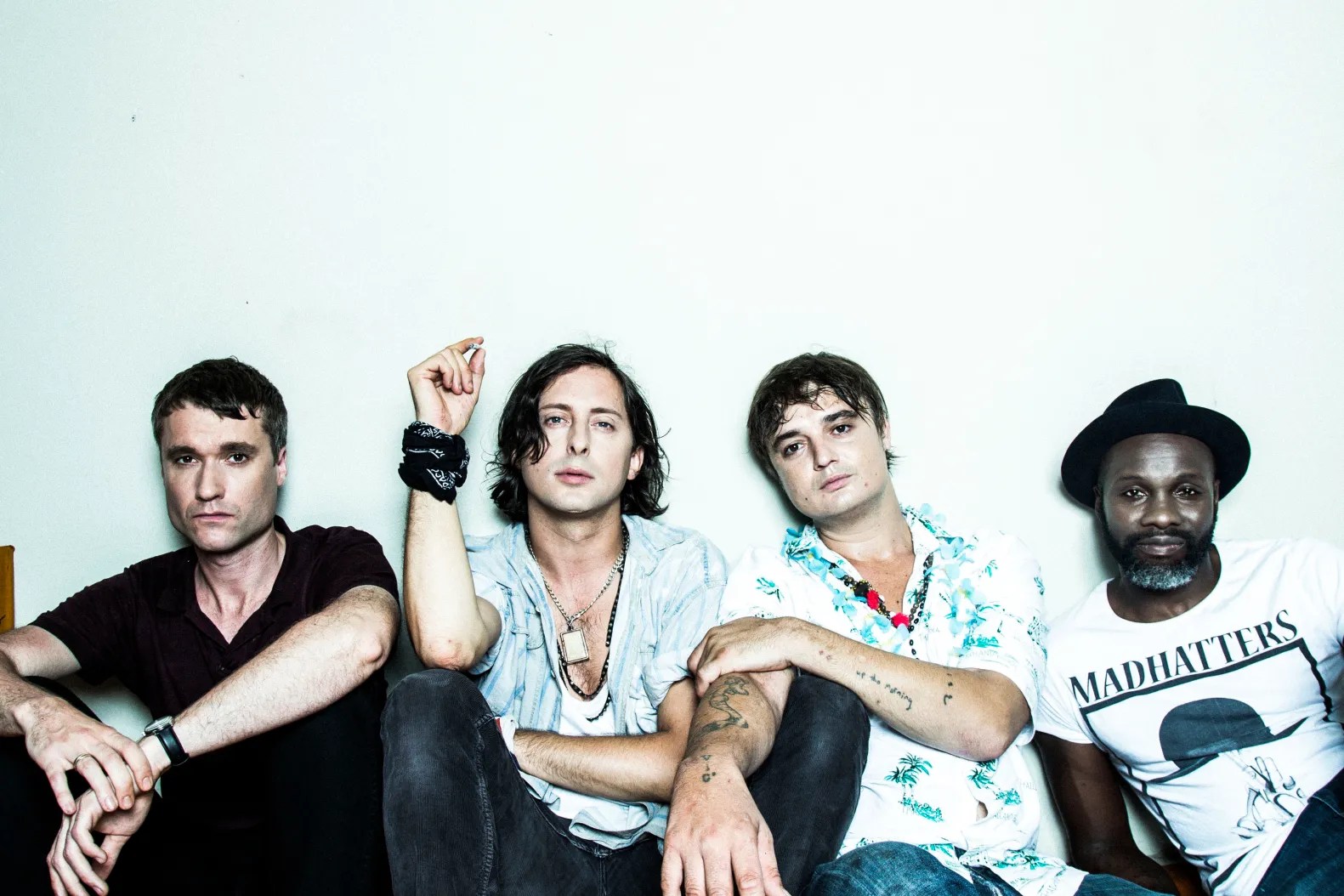
However, by 2014 Barât and Doherty seemed to have recovered from the wounds inflicted by being a part of The Libertines, and reformed to release their third studio album ‘Anthems For Doomed Youths’ in 2015. British rock journalist Alexis Petridis wrote in a Guardian article that this third album was either “a new beginning or a complete finish, but it’s a vast improvement over how The Libertine’s narrative appeared doomed to end”. Indeed, ‘Anthems For Doomed Youths’ was another success for The Libertines, yet Doherty was still struggling with his addictions, and there has been a nine year interim between the third and fourth album. Now, stagnating creativity and changing lifestyles have resulted in The Libertines reuniting once again, with Doherty and Barât stating in a recent interview that “the sand was running out” and they needed to see if they could still write together.

Production of ‘All Quiet On The Eastern Esplanade’
This fourth album was undoubtedly different from their previous releases, as it was crafted in the unfamiliar environment of Doherty’s sobriety. However, whilst Barât reassures us that “there’s still plenty of ramshackle baked in still” in their new album, The Libertines’ history of rumbustiousness, addiction and explicit ambivalence construct the vital foundations and personality of this band, leaving me wondering what type of sound The Libertines will produce in the engineered absence of these dynamics. On the other hand, Louis Theroux’s 2023 interview of a surprisingly reflective Doherty suggests that this partial sobriety has not erased the personality that lent The Libertines their notoriety. The interviews ends with Theroux’s rather troubled conclusions that despite Doherty’s gentle and boyish charm, his ubiquitous “attraction to chaos and derangement” seem very much still present.
‘All Quiet On The Eastern Esplanade’ was released through the record label EMI and was produced by Dimitri Tikovoi, whose decision to pre-release the album’s lead single ‘Run Run Run’ was well-received, with NME magazine labelling it as a “raucous indie dancefloor anthem”. Work on the album began in Jamaica and was finished off in The Libertines’ new enterprise The Albion Rooms – a hotel, restaurant and bar with studio rooms attached. ‘All Quiet On The Eastern Esplanade’ received its name from the hotel’s location in Margate, but is also a nod towards Remarque’s novel ‘All Quiet On The Western Front’, with its anti-war sentiments perhaps aligning with The Libertines’ new mantra of peace. Indeed, Barât confesses that the three previous albums had been born out of naivety, “strife” and “complexity”, whilst this album “feels like we were all actually in the same place, at the same speed and we really connected”. In many of the press interviews for the new album, Doherty and Barât acknowledge the role The Albion Rooms played in producing ‘All Quiet On The Eastern Esplanade’, citing the hotel as a “physical embodiment of the band” which unites the members. The Margate hotel also features as the background of their album cover, with various characters from the songs present in the foreground.
The Libertines’ first two albums marked an indie renaissance in noughties British rock, and their third successfully extended this reputation by assimilating to their trademark ethos of brash, punk-inspired music. However, how has ‘All Quiet On The Eastern Esplanade’ measured up to this legacy?
‘Run Run Run’
The first track on the album, ‘Run Run Run’ was a song Barât had written independently prior to the album, with Pete’s rather dismissive reflections that he didn’t add anything to it because it was already “perfectly finished”. ‘Run Run Run’ contains all the classic characteristics of a Libertines’ song – it is rowdy, fast-paced and, as Barât sardonically describes, is “the lifelong product of a life on the lash.” Rather too candidly perhaps, Doherty mentions in an interview the perils of “contractual obligations” and reveals that by the time they had finished the album, they still had a “few spots” that needed filling. Accordingly, Barât offered ‘Run Run Run’ and it became one of the final additions to the album. Still, Doherty claims “the boys anointed the song” by working out their own parts and through band collaboration they “made it into a Libertines song”. I personally think ‘Run Run Run’ is a slightly-below average Libertines song, but it has everything you would want in an indie rock song and has grown on me through its catchiness and reliability. However, I don’t think it will ever be a favourite Libertines’ song of mine, as it feels a little forced into a Libertines niche and it’s sound is less novel and grungy than some of my older favourites such as ‘Bucket Shop’ or ‘Death On The Stairs’.
‘Mustangs’
Second on the album is ‘Mustangs’ – my personal favourite of the album! It’s cheeky, playful lyricism narrating the alcohol-induced dreams of ‘Traci’ fits cleverly within the layers of vocals and the female-sung chorus. Barât describes ‘Mustang’ as a product of his time in Margate at The Albion Rooms. The song originally had nine different verses with a contrasting character and story in each verse, inspired by people he and Doherty had encountered whilst staying at the seaside hotel. What draws me to ‘Mustang’ as an album favourite is that it is reminiscent of The Libertines’ ability to transform pretty depressing, mundane narratives into an upbeat, audacious track. Lyrics I am particularly drawn to include the playful references to “Juicy Couture tracksuits” and “smoking rollies at sunset” and the way Barât performatively shivers through the lyric “Sister Mary Shivers”. Overall, I think it is just a great song to play obnoxiously loud in the car with your windows down and I love that ‘Traci’ makes an appearance on the album cover – fittingly – in her Juicy Couture tracksuit.
‘Merry Old England’
‘Merry Old England’ takes fourth spot on ‘All Quiet On The Eastern Esplanade’ and has captured attention due to its more serious content. It’s striking lyrics “Syrians, Iraqis, Ukrainians Oh, how are you finding merry old England” highlight the pertinent political environment of the UK and the populist debate surrounding the immigration crisis. Doherty asserts that this song is about “English identity” and in the same way “England forces itself into the consciousness of the world…this song is contributing to a political commentary.” Doherty also claims that the piano intro of ‘Merry Old England’ is his favourite piece of the album, although he admits that initially he wanted the intro on electric guitar (due to his self-professed obsession with The Beatles and The Smiths), producer Tikovoi convinced him the piano was more appropriate. It is evident that artists’ musical preferences guide the production of new songs and albums, and Barât also acknowledges that his descending guitar solo is heavily influenced by The Doors. Doherty and Barât have also admitted that they’ve been having trouble perfecting ‘Merry Old England’ for live performances, as the nuances of the song being built around piano provide obvious obstacles to The Libertines’ typically raucous sets led by two electric guitars. Whilst this particular song is not a huge favourite of mine, I can appreciate the way The Libertines have produced the winding guitars and layered instruments to convey and mimic the interacting voices in political debates.
‘Man With The Melody’
The fifth track of the album, ‘Man With The Melody’ is an important song to include in this commentary due to its parallel with The Libertines’ most evocative and well-known track ‘Cant Stand Me Now’. Whilst two very contrasting songs, it’s the narrative of bitter honesty within both the tracks that make them so similar. ‘Cant Stand Me Now’, as previously discussed, was used as a vehicle to air the animosity and brokenness of Doherty and Barât’s relationship in the early noughties. In the same way, ‘Man With The Melody’ articulates feelings within the band that the co-frontmen admit “couldn’t be said in conversation without leading to a punch-up”. Thus, using lyrics to address these tacit issues, the song creates an incredibly personal environment which Doherty muses is “different from their other stuff”. Interestingly, the gems of the songs were taken from bassist Hassall’s own song ‘Annabel Lee’, named after an Edgar Allen Poe poem, and each band member wrote their own verse – quite literally turning it into a four-way mini-monologue between the four men. Barât discuss how perfecting the guitar solo has been a “nightmare” due to the difficulties of preserving the wildness and “weirdness” of the song whilst playing within the boundaries of the song’s key and admitted that it was a struggle not to “descend into cheesy, bluesy pentatonic”. Despite the front-men asserting it took quite a while to decide if the song should be added to the album, I think it’s a very good thing it was. The painful delicacy and vulnerability of the lyrics and the inclusion of vocals not just by Doherty and Barât, but by Powell and Hassall too, create a rare insight into the unified aspirations The Libertines have for their next chapter. The enchantingly sombre guitar solo combined with the background violin and synthesiser result in ‘Man With The Melody’ being a milestone in the timeline of The Libertines’ work.
‘Night Of The Hunter’
Jumping to the seventh song of ‘All Quiet On The Eastern Esplanade’, ‘Night Of The Hunter’ is another favourite of mine on this album. Whilst Doherty claims the track is about how “knife crime is a scourge on humanity”, one can’t help but draw parallels between the lyrics “I was calling to tell you, baby They’re taking me away for a while” and Doherty’s own troubled history with the law. Doherty details how this song undermines the pointless violence of “justified revenge”. He explains that the song narrates the story of a young man who is about to be arrested for a stabbing, and while fumbling with his car radio to find a “decent grime song to get nicked to”, he accidently switches to a country and western station. Barât adds that he felt ‘Night Of The Hunter’ needed a “rousing, big, country and western style chorus” to create dichotomy within the song and to further blur the lines between fantasy and reality. The song’s title might be a reference to the 1955 American noir thriller, but a more noteworthy reference is that that the main melody is reminiscent of ‘Swan Lake’ by Tchaikovsky, an influence reflected by the ballet move performed at the end of the music video. I personally think this song will become a Libertines classic, not only because of the heartbreaking way Doherty sings the lyrics, but because of the atmosphere created through its expansive, melodic production.
‘Songs They Never Play On The radio’
Finally, the last song on the album I will be discussing is the final track of the album; ‘Songs They Never Play On The Radio’. Another favourite of mine from the album, it perfectly leaves the album soaking in an oxymoron of melancholy and triumph, driven by energetic backing-vocals, electric guitar and trademark self-mythologising lyrics. The track was first composed by Doherty in 2006 and this is evident through the song’s resemblance to early Libertines’ work with its introspective and nostalgic echoes. ‘Songs They Never Play On The Radio’ leaves the listener with a sense of fondness for The Libertines and promises a future for a band that for so long, seemed destined to die a young and tragic death.
Final Thoughts
Overall, whilst ‘All Quiet On The Eastern Esplanade’ might not be as innovative or rumbustious as their previous albums, what it lacks in youthful insouciance, it makes up for in its delicacy, thoughtfulness and maturity as an album constructed by a group of people who have seen the best and worst of each other. At it’s worst, it is an unsuccessful mimicry of the sound of a once-famous band, but I think this would be an overly critical review. Whilst it doesn’t quite captivate me in the same way The Libertines’ older albums have, it’s promising to hear the band function so cohesively together. Therefore, although it may take some listening for me to herald this as a true Libertines album, I think denying a band any room for growth, complexity and change is unrealistic and inflexible. Given the struggles this band have been through, I think their first album back after nine years is a pretty solid start.
References
ALL QUIET ON THE EASTERN ESPLANADE (2024). https://www.officialcharts.com/albums/libertines-all-quiet-on-the-eastern-esplanade/.
Louis Theroux Interviews – Series 2: 2. Pete Doherty (2023). https://www.bbc.co.uk/iplayer/episode/m001sh6c/louis-theroux-interviews-series-2-2-pete-doherty
Monroe, J. (2023) ‘The Libertines return with first album since 2015, share new song: Listen,’ Pitchfork, 13 October. https://pitchfork.com/news/the-libertines-return-with-first-album-since-2015-share-new-song-listen/.
NME (2023) The Libertines talk being clean and connected for ‘All Quiet On The Eastern Esplanade.’ https://www.youtube.com/watch?v=CtuPJQWz_mQ.
Online, W. (2024) Album review: The Libertines – ‘All Quiet on the Eastern Esplanade’ — When the Horn Blows. https://whenthehornblows.com/content/2024/4/5/album-review-the-libertines-all-quiet-on-the-eastern-esplanade.
Petridis, A. (2020) ‘The Libertines,’ The Guardian, 26 March. https://www.theguardian.com/music/2010/aug/26/the-libertines-live-review-forum.
Smith, C. (2024) The Libertines land first Number 1 album in 20 years with All Quiet On The Eastern Esplanade. https://www.officialcharts.com/chart-news/the-libertines-all-quiet-on-the-eastern-esplanade-number-1-album/.
Spotify Tape Notes (2024) TN:134 ‘The Libertines’ ‘https://open.spotify.com/episode/2EEmdn4T9QzEVEnecCqxd3?si=b19dfc0b84ca49bd.
Spotify Tim’s Listening Party (2024) ‘The Libertines’ https://open.spotify.com/episode/7f9cPcPFZJiZ7qlWloLDBG?si=71d810270d9b4e8e.
Steveforthedeaf, V.A.P.B. (2024) Night of the Hunter – The Libertines. https://steveforthedeaf.wordpress.com/2023/12/22/night-of-the-hunter-the-libertines/.
The Libertines (2018) The Libertines – there are no innocent bystanders. https://www.youtube.com/watch?v=0Bs10MD32KA.
Trash Theory (2021) ‘Can’t Stand Me Now’ – The Shipwreck of the Libertines | New British Canon. https://www.youtube.com/watch?v=rdUWRR5cxxI.
Trendell, A. (2023) ‘The Libertines return with ‘Run Run Run’ and announce new album ‘All Quiet On The Eastern Esplanade’,’ NME, 2 November. https://www.nme.com/news/music/libertines-run-run-run-new-album-all-quiet-eastern-esplanade-margate-tour-3514134.
Wikipedia contributors (2024) Anthems for Doomed Youth. https://en.wikipedia.org/wiki/Anthems_for_Doomed_Youth.
 livlistens.com
Leave a comment